Jump to section
Penny Deals and Hidden Clearance: A Cautious Field Guide is not a hype piece. It is a buyer-readiness guide for clearance hunters chasing local in-store finds.
The real problem is not finding a cheap item. The problem is knowing which cheap item deserves your money before the window closes.
Most beginners lose time in the gap between excitement and verification. They see a screenshot, feel the rush, buy too much, then discover the margin was never there.
A better process slows the first ten seconds and speeds up everything after. You need a repeatable way to check demand, shipping weight, sell-through, return policy, and cash tied up in inventory.
That is the reason a community can be useful. Not because strangers magically create profit for you, but because more trained eyes can surface opportunities while the best members teach you what to ignore.
The page should never promise guaranteed profit. It should promise a sharper workflow: clearer alerts, better filters, faster verification, fewer impulse buys, and a place to compare notes with people doing the same work.
If you remember one line, remember this: a calmer way to evaluate hidden clearance trips only matters when the process protects you from local inventory and store policy can break the plan.
Cart, resale, fees, shipping, return policy
The five-minute deal verification stack
The five-minute deal verification stack starts with a simple tension: clearance hunters chasing local in-store finds want a calmer way to evaluate hidden clearance trips, but local inventory and store policy can break the plan.
This is where the offer has to earn trust. A bold claim is cheap. A usable method is not.
The useful question is not "can somebody make money doing this?" The useful question is "what must be true before this makes sense for me?"
a location-aware checklist matters because it turns a vague side-hustle idea into a sequence. Spot the opportunity. Verify the price. Check the resale path. Control the downside. Review the result.
That sequence removes drama. It also removes a lot of bad buys. If a deal cannot survive the checklist, it was never a deal. It was a rush wearing a clearance sticker.
The best members in any deal community do not buy everything. They build a private rulebook. They know which categories move, which stores cancel orders, which marketplaces punish shipping mistakes, and which "wins" are only wins before fees.
Picture the moment this usually goes wrong. An alert hits. The product photo looks clean. The discount feels too large to ignore. Somebody posts "easy flip" and the room starts moving. That is the second where a beginner thinks the decision has already been made. It has not. The decision starts there.
A sharper buyer pauses long enough to ask one grounded question: what would make this a no? No sold listings. No shipping margin. Too much competition. Local pickup only. Return risk. Store cancellation history. Slow cash cycle. The point is not to become timid. The point is to keep one bad assumption from getting dressed up as confidence.
This is why visual sections, checklists, tables, and comparison cards belong in the article. They break the trance. They make the reader look at the deal from another angle. A paragraph can persuade. A table can confront. A checklist can slow the hand before it clicks buy.
Use a one-line rule for this section: "I do not buy until I can explain the exit." That sentence does a lot of work. It forces a marketplace choice. It forces a buyer profile. It forces fee math. It forces a time-to-cash estimate. If the explanation sounds vague, the buy is vague too.
The second rule is smaller: cap the first buy. The first purchase is research with a receipt. It should teach you whether the alert quality, category, marketplace, and your own follow-through are real. Scaling comes after evidence. Scaling before evidence is just buying more of your uncertainty.
- Check the cart price before celebrating
- Search sold listings, not active listings
- Subtract platform fees and shipping
- Assume cancellations happen
- Write the reason before you buy
Use this section as a filter. If it makes the next action clearer, keep it. If it only makes the opportunity feel louder, treat it as noise.
A cheap item across town can still be expensive when time, gas, and friction are counted. That is the real cost of poor process: not just one bad purchase, but months of chasing the wrong signals because nobody forced the math into the open.
A strong landing page should bring the buyer back to the same sober decision: join if you want the workflow, the alerts, the community, and the discipline to verify. Do not join because a headline made profit feel automatic.

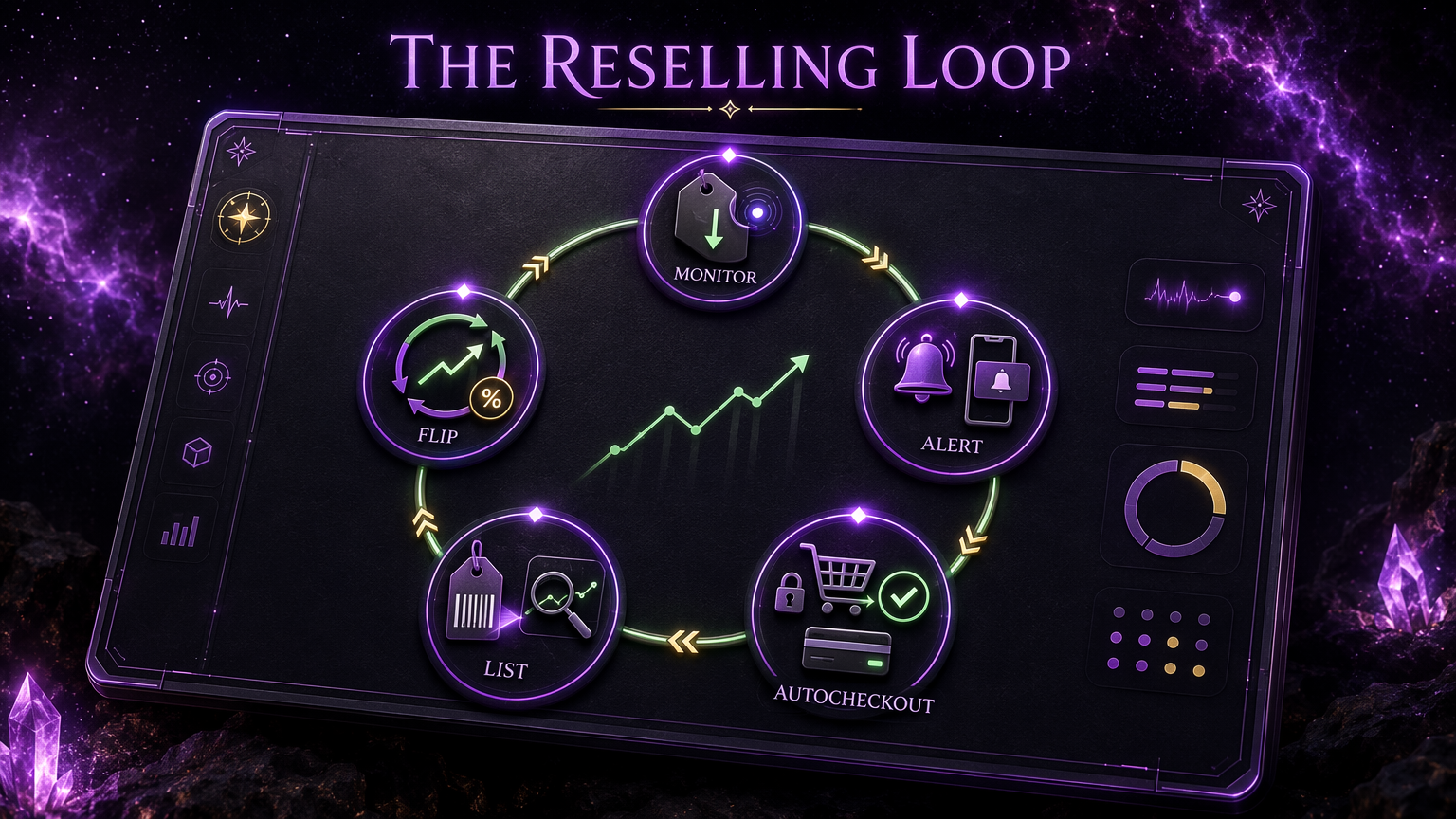
A clean pipeline from alert to review
The alert-to-profit workflow
The alert-to-profit workflow starts with a simple tension: clearance hunters chasing local in-store finds want a calmer way to evaluate hidden clearance trips, but local inventory and store policy can break the plan.
This is where the offer has to earn trust. A bold claim is cheap. A usable method is not.
The useful question is not "can somebody make money doing this?" The useful question is "what must be true before this makes sense for me?"
a location-aware checklist matters because it turns a vague side-hustle idea into a sequence. Spot the opportunity. Verify the price. Check the resale path. Control the downside. Review the result.
That sequence removes drama. It also removes a lot of bad buys. If a deal cannot survive the checklist, it was never a deal. It was a rush wearing a clearance sticker.
The best members in any deal community do not buy everything. They build a private rulebook. They know which categories move, which stores cancel orders, which marketplaces punish shipping mistakes, and which "wins" are only wins before fees.
Picture the moment this usually goes wrong. An alert hits. The product photo looks clean. The discount feels too large to ignore. Somebody posts "easy flip" and the room starts moving. That is the second where a beginner thinks the decision has already been made. It has not. The decision starts there.
A sharper buyer pauses long enough to ask one grounded question: what would make this a no? No sold listings. No shipping margin. Too much competition. Local pickup only. Return risk. Store cancellation history. Slow cash cycle. The point is not to become timid. The point is to keep one bad assumption from getting dressed up as confidence.
This is why visual sections, checklists, tables, and comparison cards belong in the article. They break the trance. They make the reader look at the deal from another angle. A paragraph can persuade. A table can confront. A checklist can slow the hand before it clicks buy.
Use a one-line rule for this section: "I do not buy until I can explain the exit." That sentence does a lot of work. It forces a marketplace choice. It forces a buyer profile. It forces fee math. It forces a time-to-cash estimate. If the explanation sounds vague, the buy is vague too.
The second rule is smaller: cap the first buy. The first purchase is research with a receipt. It should teach you whether the alert quality, category, marketplace, and your own follow-through are real. Scaling comes after evidence. Scaling before evidence is just buying more of your uncertainty.
- Alert lands
- Price is verified
- Demand is checked
- Quantity is capped
- Result is logged
Use this section as a filter. If it makes the next action clearer, keep it. If it only makes the opportunity feel louder, treat it as noise.
A cheap item across town can still be expensive when time, gas, and friction are counted. That is the real cost of poor process: not just one bad purchase, but months of chasing the wrong signals because nobody forced the math into the open.
A strong landing page should bring the buyer back to the same sober decision: join if you want the workflow, the alerts, the community, and the discipline to verify. Do not join because a headline made profit feel automatic.
Put the framework to work.
Join for the workflow: alerts, verification habits, community memory, and a cleaner review loop.
Join Frugal Season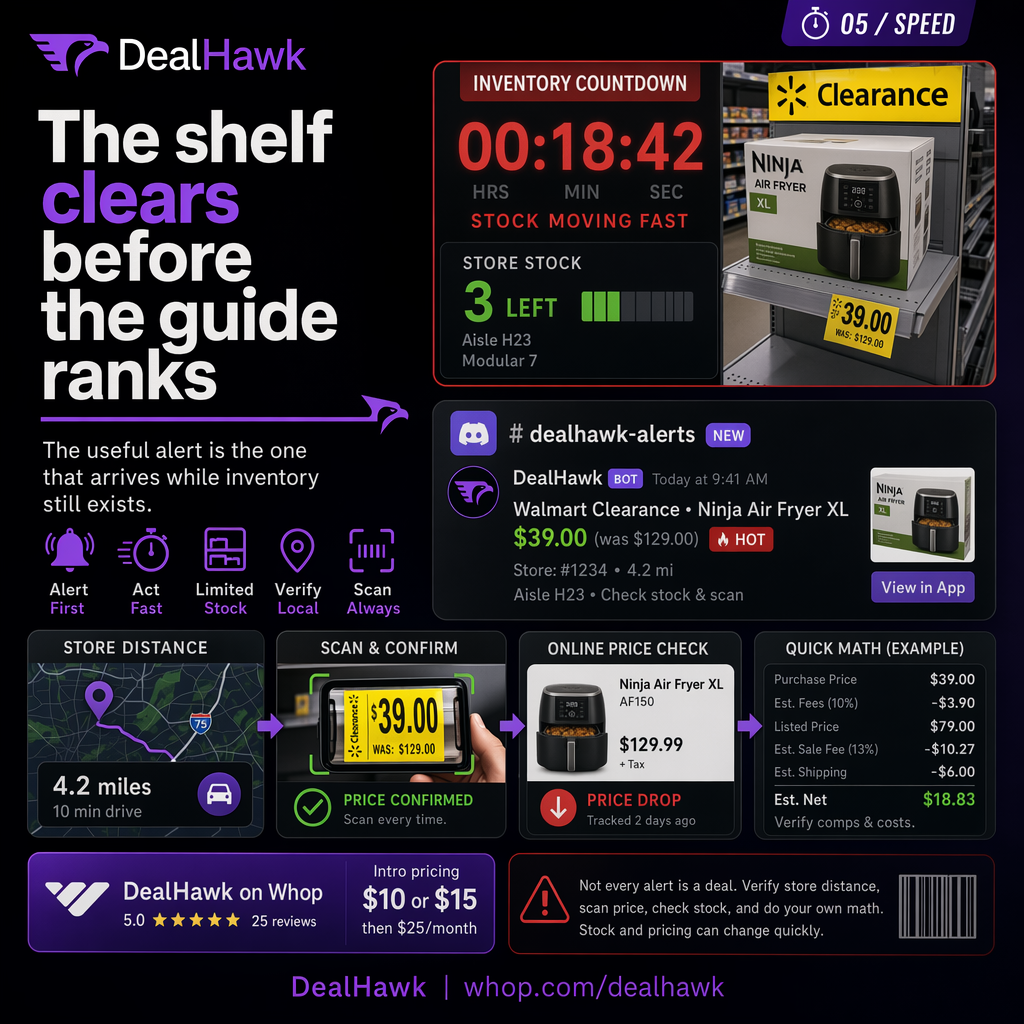
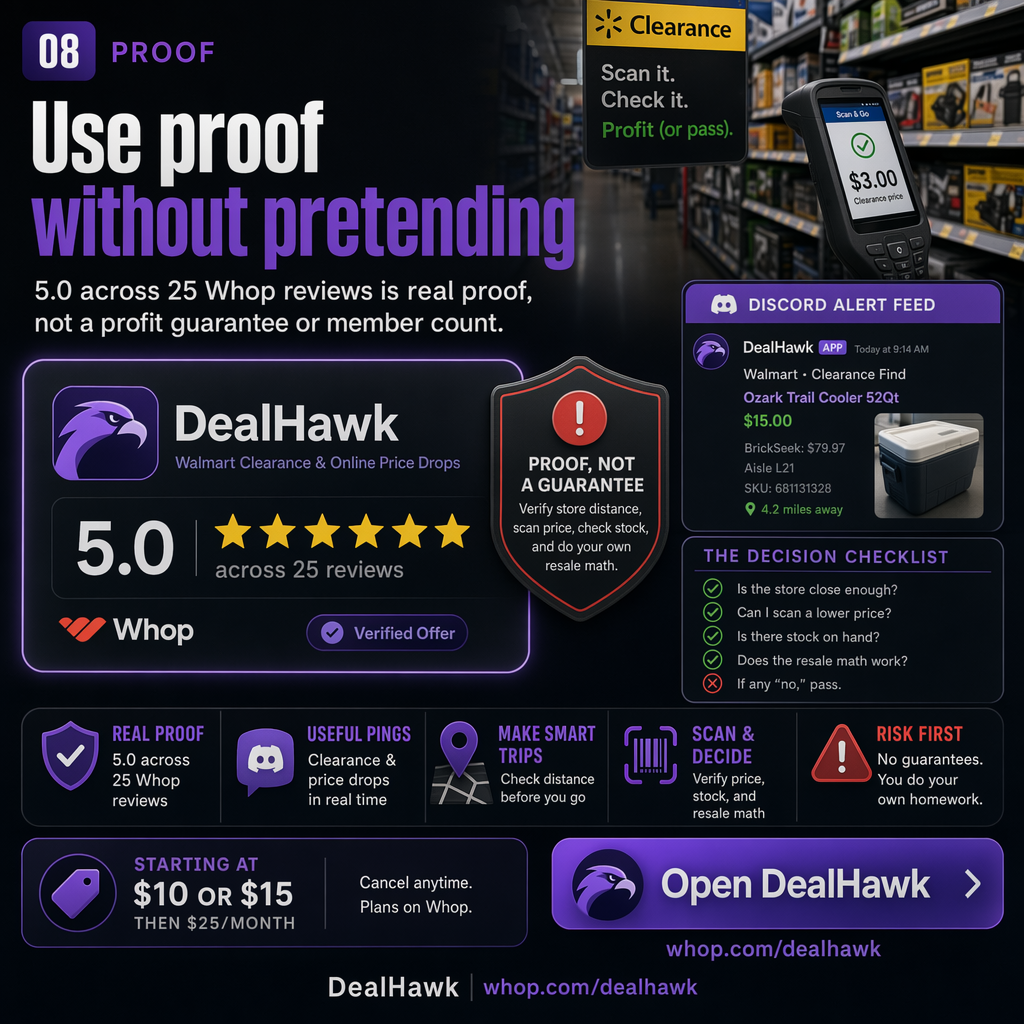
Education spend separated from outcome claims
The risk boundary nobody should blur
The risk boundary nobody should blur starts with a simple tension: clearance hunters chasing local in-store finds want a calmer way to evaluate hidden clearance trips, but local inventory and store policy can break the plan.
This is where the offer has to earn trust. A bold claim is cheap. A usable method is not.
The useful question is not "can somebody make money doing this?" The useful question is "what must be true before this makes sense for me?"
a location-aware checklist matters because it turns a vague side-hustle idea into a sequence. Spot the opportunity. Verify the price. Check the resale path. Control the downside. Review the result.
That sequence removes drama. It also removes a lot of bad buys. If a deal cannot survive the checklist, it was never a deal. It was a rush wearing a clearance sticker.
The best members in any deal community do not buy everything. They build a private rulebook. They know which categories move, which stores cancel orders, which marketplaces punish shipping mistakes, and which "wins" are only wins before fees.
Picture the moment this usually goes wrong. An alert hits. The product photo looks clean. The discount feels too large to ignore. Somebody posts "easy flip" and the room starts moving. That is the second where a beginner thinks the decision has already been made. It has not. The decision starts there.
A sharper buyer pauses long enough to ask one grounded question: what would make this a no? No sold listings. No shipping margin. Too much competition. Local pickup only. Return risk. Store cancellation history. Slow cash cycle. The point is not to become timid. The point is to keep one bad assumption from getting dressed up as confidence.
This is why visual sections, checklists, tables, and comparison cards belong in the article. They break the trance. They make the reader look at the deal from another angle. A paragraph can persuade. A table can confront. A checklist can slow the hand before it clicks buy.
Use a one-line rule for this section: "I do not buy until I can explain the exit." That sentence does a lot of work. It forces a marketplace choice. It forces a buyer profile. It forces fee math. It forces a time-to-cash estimate. If the explanation sounds vague, the buy is vague too.
The second rule is smaller: cap the first buy. The first purchase is research with a receipt. It should teach you whether the alert quality, category, marketplace, and your own follow-through are real. Scaling comes after evidence. Scaling before evidence is just buying more of your uncertainty.
- No guaranteed profit
- No typical-results assumption
- No borrowed money for inventory
- No blind bulk buys
- No revenge spending after a miss
Use this section as a filter. If it makes the next action clearer, keep it. If it only makes the opportunity feel louder, treat it as noise.
A cheap item across town can still be expensive when time, gas, and friction are counted. That is the real cost of poor process: not just one bad purchase, but months of chasing the wrong signals because nobody forced the math into the open.
A strong landing page should bring the buyer back to the same sober decision: join if you want the workflow, the alerts, the community, and the discipline to verify. Do not join because a headline made profit feel automatic.
A simple net-profit calculator
The margin calculator that decides the buy
The margin calculator that decides the buy starts with a simple tension: clearance hunters chasing local in-store finds want a calmer way to evaluate hidden clearance trips, but local inventory and store policy can break the plan.
This is where the offer has to earn trust. A bold claim is cheap. A usable method is not.
The useful question is not "can somebody make money doing this?" The useful question is "what must be true before this makes sense for me?"
a location-aware checklist matters because it turns a vague side-hustle idea into a sequence. Spot the opportunity. Verify the price. Check the resale path. Control the downside. Review the result.
That sequence removes drama. It also removes a lot of bad buys. If a deal cannot survive the checklist, it was never a deal. It was a rush wearing a clearance sticker.
The best members in any deal community do not buy everything. They build a private rulebook. They know which categories move, which stores cancel orders, which marketplaces punish shipping mistakes, and which "wins" are only wins before fees.
Picture the moment this usually goes wrong. An alert hits. The product photo looks clean. The discount feels too large to ignore. Somebody posts "easy flip" and the room starts moving. That is the second where a beginner thinks the decision has already been made. It has not. The decision starts there.
A sharper buyer pauses long enough to ask one grounded question: what would make this a no? No sold listings. No shipping margin. Too much competition. Local pickup only. Return risk. Store cancellation history. Slow cash cycle. The point is not to become timid. The point is to keep one bad assumption from getting dressed up as confidence.
This is why visual sections, checklists, tables, and comparison cards belong in the article. They break the trance. They make the reader look at the deal from another angle. A paragraph can persuade. A table can confront. A checklist can slow the hand before it clicks buy.
Use a one-line rule for this section: "I do not buy until I can explain the exit." That sentence does a lot of work. It forces a marketplace choice. It forces a buyer profile. It forces fee math. It forces a time-to-cash estimate. If the explanation sounds vague, the buy is vague too.
The second rule is smaller: cap the first buy. The first purchase is research with a receipt. It should teach you whether the alert quality, category, marketplace, and your own follow-through are real. Scaling comes after evidence. Scaling before evidence is just buying more of your uncertainty.
- Sale price
- Cost of goods
- Shipping
- Marketplace fee
- Time to cash
Use this section as a filter. If it makes the next action clearer, keep it. If it only makes the opportunity feel louder, treat it as noise.
A cheap item across town can still be expensive when time, gas, and friction are counted. That is the real cost of poor process: not just one bad purchase, but months of chasing the wrong signals because nobody forced the math into the open.
A strong landing page should bring the buyer back to the same sober decision: join if you want the workflow, the alerts, the community, and the discipline to verify. Do not join because a headline made profit feel automatic.
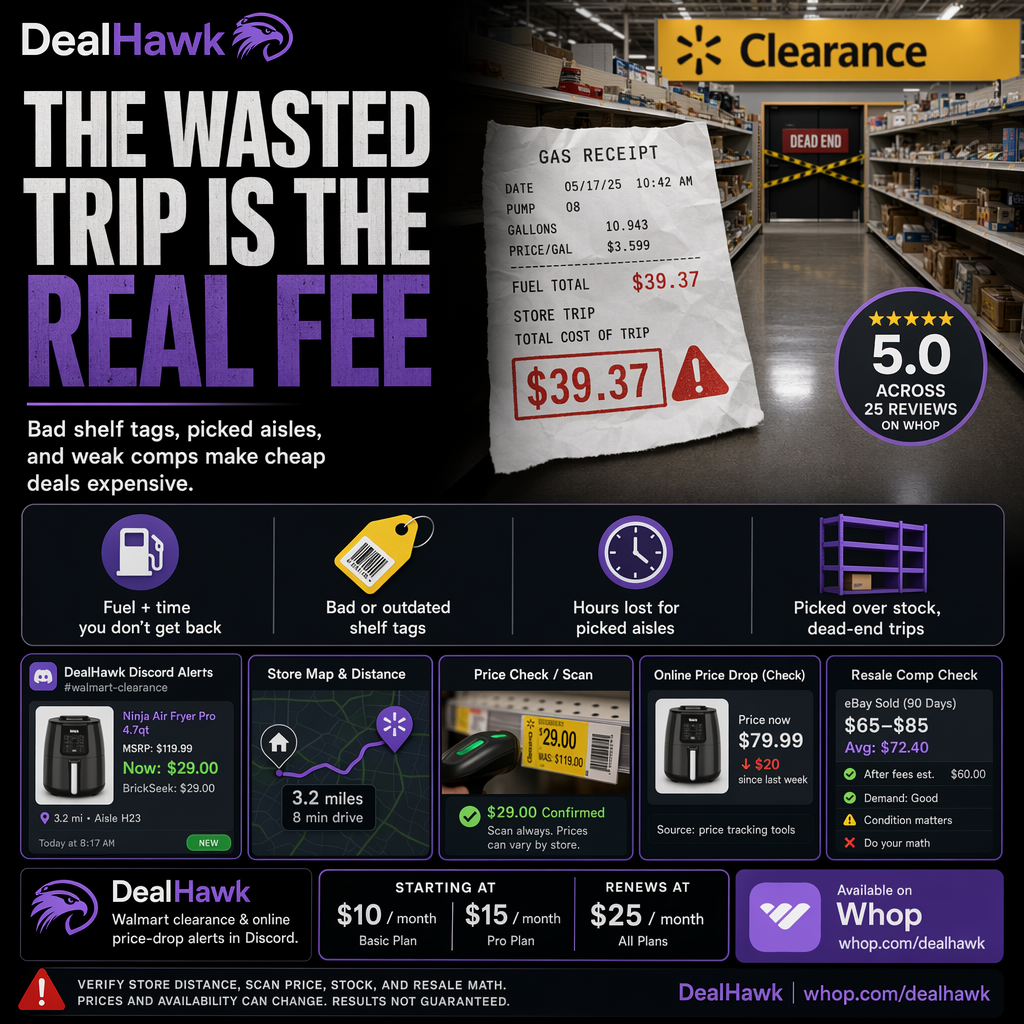
Bad buys leaking margin at every step
The expensive beginner mistakes
The expensive beginner mistakes starts with a simple tension: clearance hunters chasing local in-store finds want a calmer way to evaluate hidden clearance trips, but local inventory and store policy can break the plan.
This is where the offer has to earn trust. A bold claim is cheap. A usable method is not.
The useful question is not "can somebody make money doing this?" The useful question is "what must be true before this makes sense for me?"
a location-aware checklist matters because it turns a vague side-hustle idea into a sequence. Spot the opportunity. Verify the price. Check the resale path. Control the downside. Review the result.
That sequence removes drama. It also removes a lot of bad buys. If a deal cannot survive the checklist, it was never a deal. It was a rush wearing a clearance sticker.
The best members in any deal community do not buy everything. They build a private rulebook. They know which categories move, which stores cancel orders, which marketplaces punish shipping mistakes, and which "wins" are only wins before fees.
Picture the moment this usually goes wrong. An alert hits. The product photo looks clean. The discount feels too large to ignore. Somebody posts "easy flip" and the room starts moving. That is the second where a beginner thinks the decision has already been made. It has not. The decision starts there.
A sharper buyer pauses long enough to ask one grounded question: what would make this a no? No sold listings. No shipping margin. Too much competition. Local pickup only. Return risk. Store cancellation history. Slow cash cycle. The point is not to become timid. The point is to keep one bad assumption from getting dressed up as confidence.
This is why visual sections, checklists, tables, and comparison cards belong in the article. They break the trance. They make the reader look at the deal from another angle. A paragraph can persuade. A table can confront. A checklist can slow the hand before it clicks buy.
Use a one-line rule for this section: "I do not buy until I can explain the exit." That sentence does a lot of work. It forces a marketplace choice. It forces a buyer profile. It forces fee math. It forces a time-to-cash estimate. If the explanation sounds vague, the buy is vague too.
The second rule is smaller: cap the first buy. The first purchase is research with a receipt. It should teach you whether the alert quality, category, marketplace, and your own follow-through are real. Scaling comes after evidence. Scaling before evidence is just buying more of your uncertainty.
- Buying because the discount is large
- Ignoring size and weight
- Copying alerts without context
- Holding dead inventory too long
- Counting revenue as profit
Use this section as a filter. If it makes the next action clearer, keep it. If it only makes the opportunity feel louder, treat it as noise.
A cheap item across town can still be expensive when time, gas, and friction are counted. That is the real cost of poor process: not just one bad purchase, but months of chasing the wrong signals because nobody forced the math into the open.
A strong landing page should bring the buyer back to the same sober decision: join if you want the workflow, the alerts, the community, and the discipline to verify. Do not join because a headline made profit feel automatic.
Put the framework to work.
Join for the workflow: alerts, verification habits, community memory, and a cleaner review loop.
Join Frugal Season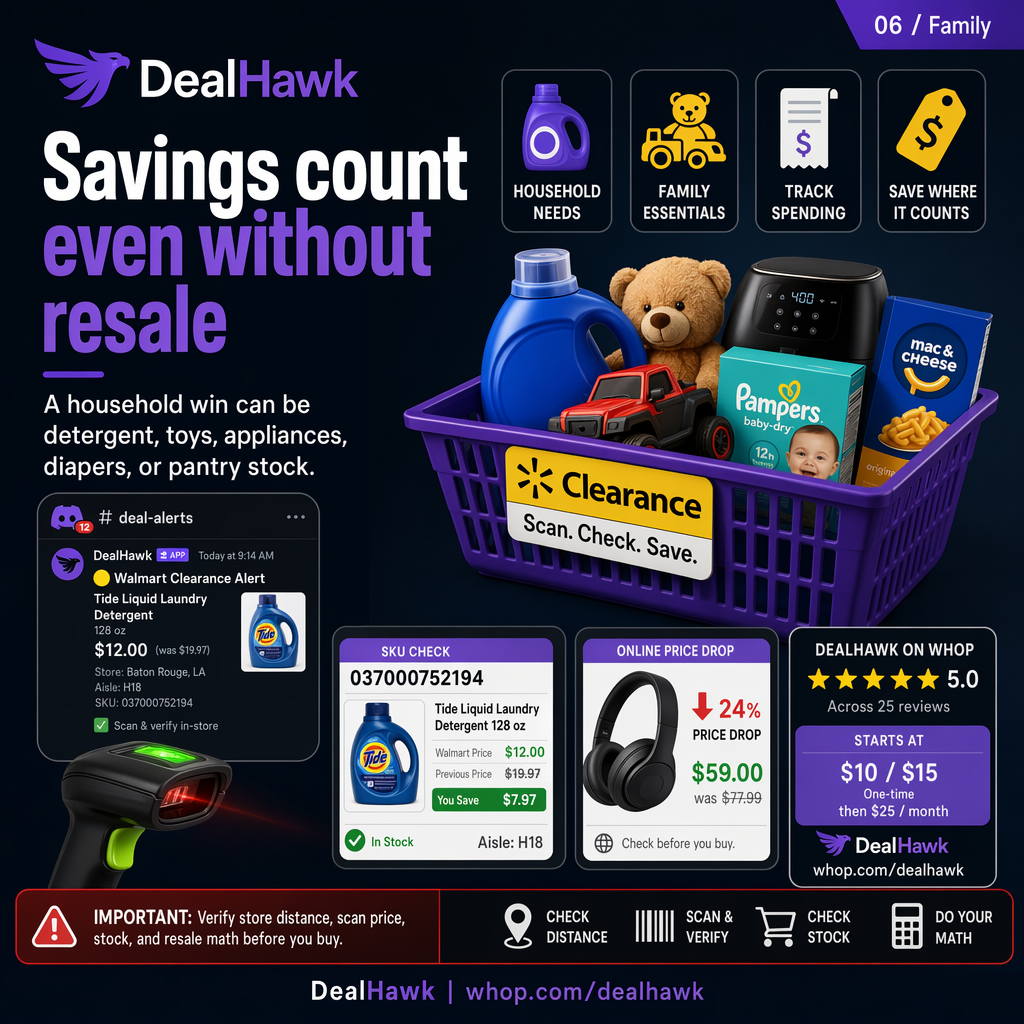
Buyer-fit filter
Who should join and who should skip
Who should join and who should skip starts with a simple tension: clearance hunters chasing local in-store finds want a calmer way to evaluate hidden clearance trips, but local inventory and store policy can break the plan.
This is where the offer has to earn trust. A bold claim is cheap. A usable method is not.
The useful question is not "can somebody make money doing this?" The useful question is "what must be true before this makes sense for me?"
a location-aware checklist matters because it turns a vague side-hustle idea into a sequence. Spot the opportunity. Verify the price. Check the resale path. Control the downside. Review the result.
That sequence removes drama. It also removes a lot of bad buys. If a deal cannot survive the checklist, it was never a deal. It was a rush wearing a clearance sticker.
The best members in any deal community do not buy everything. They build a private rulebook. They know which categories move, which stores cancel orders, which marketplaces punish shipping mistakes, and which "wins" are only wins before fees.
Picture the moment this usually goes wrong. An alert hits. The product photo looks clean. The discount feels too large to ignore. Somebody posts "easy flip" and the room starts moving. That is the second where a beginner thinks the decision has already been made. It has not. The decision starts there.
A sharper buyer pauses long enough to ask one grounded question: what would make this a no? No sold listings. No shipping margin. Too much competition. Local pickup only. Return risk. Store cancellation history. Slow cash cycle. The point is not to become timid. The point is to keep one bad assumption from getting dressed up as confidence.
This is why visual sections, checklists, tables, and comparison cards belong in the article. They break the trance. They make the reader look at the deal from another angle. A paragraph can persuade. A table can confront. A checklist can slow the hand before it clicks buy.
Use a one-line rule for this section: "I do not buy until I can explain the exit." That sentence does a lot of work. It forces a marketplace choice. It forces a buyer profile. It forces fee math. It forces a time-to-cash estimate. If the explanation sounds vague, the buy is vague too.
The second rule is smaller: cap the first buy. The first purchase is research with a receipt. It should teach you whether the alert quality, category, marketplace, and your own follow-through are real. Scaling comes after evidence. Scaling before evidence is just buying more of your uncertainty.
- Join if you can act fast
- Join if you track numbers
- Skip if you need guarantees
- Skip if you cannot buy inventory
- Skip if Discord overwhelms you
Use this section as a filter. If it makes the next action clearer, keep it. If it only makes the opportunity feel louder, treat it as noise.
A cheap item across town can still be expensive when time, gas, and friction are counted. That is the real cost of poor process: not just one bad purchase, but months of chasing the wrong signals because nobody forced the math into the open.
A strong landing page should bring the buyer back to the same sober decision: join if you want the workflow, the alerts, the community, and the discipline to verify. Do not join because a headline made profit feel automatic.
Two paths side by side
Community alerts versus solo searching
Community alerts versus solo searching starts with a simple tension: clearance hunters chasing local in-store finds want a calmer way to evaluate hidden clearance trips, but local inventory and store policy can break the plan.
This is where the offer has to earn trust. A bold claim is cheap. A usable method is not.
The useful question is not "can somebody make money doing this?" The useful question is "what must be true before this makes sense for me?"
a location-aware checklist matters because it turns a vague side-hustle idea into a sequence. Spot the opportunity. Verify the price. Check the resale path. Control the downside. Review the result.
That sequence removes drama. It also removes a lot of bad buys. If a deal cannot survive the checklist, it was never a deal. It was a rush wearing a clearance sticker.
The best members in any deal community do not buy everything. They build a private rulebook. They know which categories move, which stores cancel orders, which marketplaces punish shipping mistakes, and which "wins" are only wins before fees.
Picture the moment this usually goes wrong. An alert hits. The product photo looks clean. The discount feels too large to ignore. Somebody posts "easy flip" and the room starts moving. That is the second where a beginner thinks the decision has already been made. It has not. The decision starts there.
A sharper buyer pauses long enough to ask one grounded question: what would make this a no? No sold listings. No shipping margin. Too much competition. Local pickup only. Return risk. Store cancellation history. Slow cash cycle. The point is not to become timid. The point is to keep one bad assumption from getting dressed up as confidence.
This is why visual sections, checklists, tables, and comparison cards belong in the article. They break the trance. They make the reader look at the deal from another angle. A paragraph can persuade. A table can confront. A checklist can slow the hand before it clicks buy.
Use a one-line rule for this section: "I do not buy until I can explain the exit." That sentence does a lot of work. It forces a marketplace choice. It forces a buyer profile. It forces fee math. It forces a time-to-cash estimate. If the explanation sounds vague, the buy is vague too.
The second rule is smaller: cap the first buy. The first purchase is research with a receipt. It should teach you whether the alert quality, category, marketplace, and your own follow-through are real. Scaling comes after evidence. Scaling before evidence is just buying more of your uncertainty.
- More eyes on more stores
- Faster confirmation
- Better category memory
- Shared misses
- Less isolated guessing
Use this section as a filter. If it makes the next action clearer, keep it. If it only makes the opportunity feel louder, treat it as noise.
A cheap item across town can still be expensive when time, gas, and friction are counted. That is the real cost of poor process: not just one bad purchase, but months of chasing the wrong signals because nobody forced the math into the open.
A strong landing page should bring the buyer back to the same sober decision: join if you want the workflow, the alerts, the community, and the discipline to verify. Do not join because a headline made profit feel automatic.
The final decision
The final decision is practical.
If you want passive income, this is the wrong frame. If you want a repeatable deal-verification habit, a faster alert surface, and a community that can pressure-test your thinking, the offer becomes easier to evaluate.
Start small. Track every buy. Separate shipped orders from cancelled orders. Separate gross resale price from net profit. Separate impressive screenshots from money that actually cleared.
That is how a side hustle becomes a system instead of a story you tell yourself after a lucky week.
Best next step
Open the current Whop page, verify live price and access terms, then decide whether the workflow fits your week.