Frugal Season helps you stop chasing random discounts and build a deal-verification machine.
Frugal Season makes the most sense for people who want alerts, training, and community memory. The win is not blind hype. The win is a sharper loop: find the deal, verify the margin, buy small, list clean, review the result.
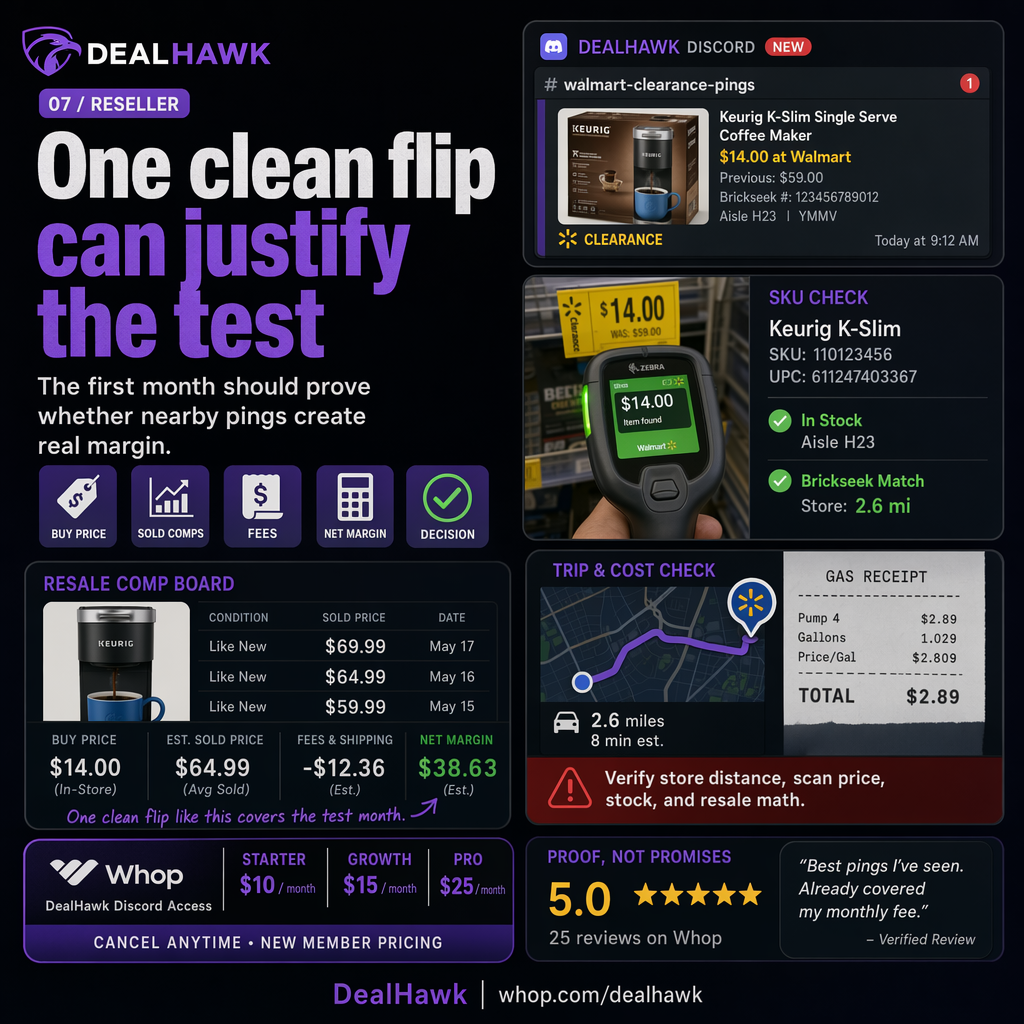
Target check before a buy
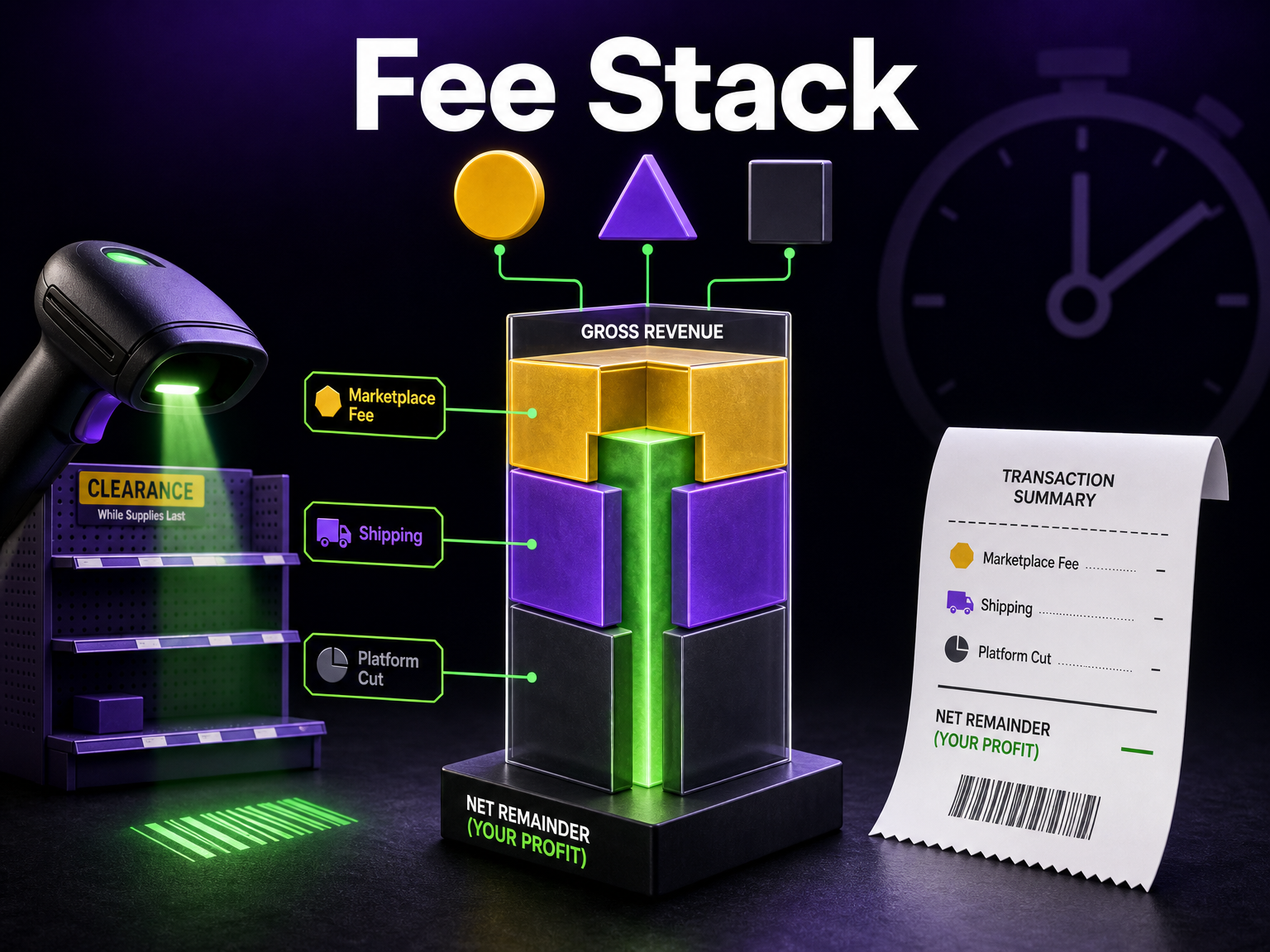
Revenue is not the score
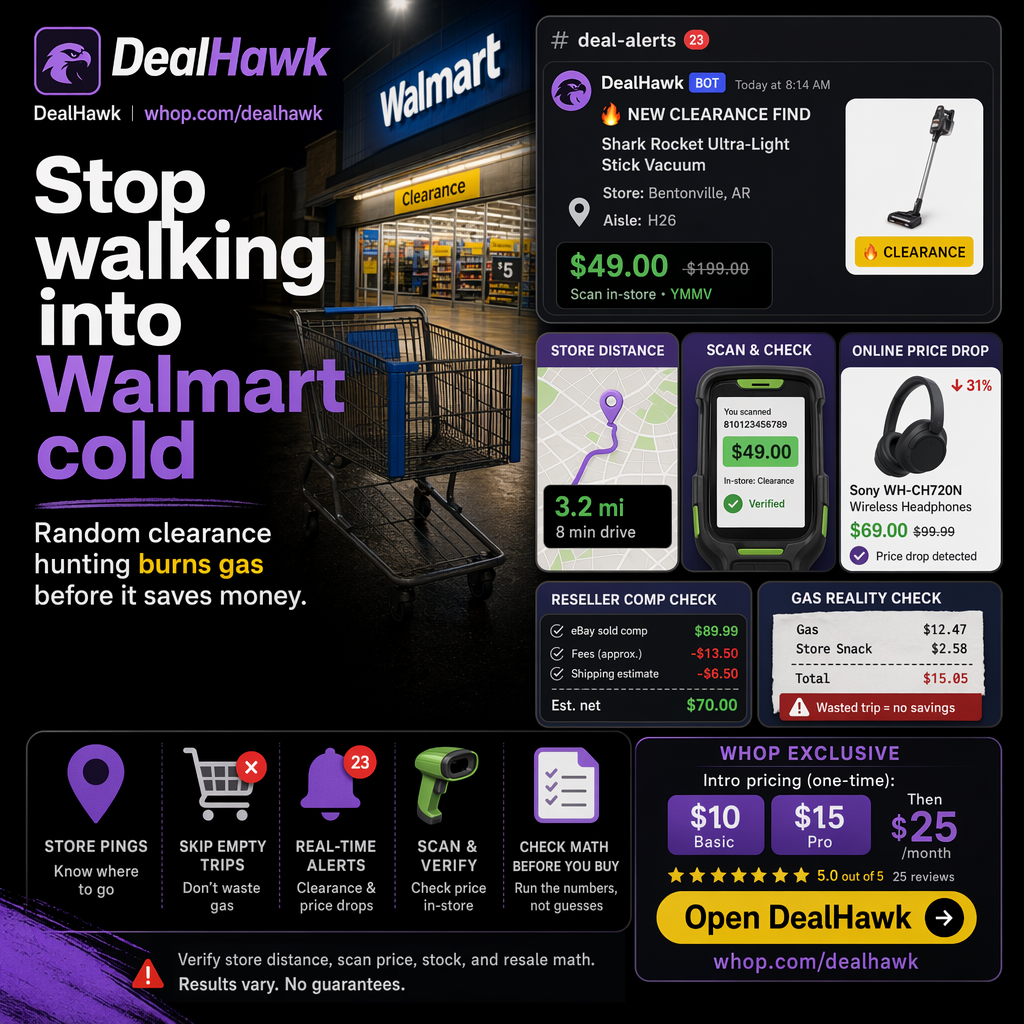
Alerts plus community memory
Test before scaling
Prompt-enhanced visual system: alert, verify, buy small, list, review.
The problem is not deal access. It is deal judgment.
The problem is not deal access. It is deal judgment.
Most people do not fail because they never see a discount. They fail because the discount arrives without a process. The screenshot looks exciting. The cart looks real. The margin looks obvious. Then shipping, cancellation, platform fees, slow sell-through, and bad category choice take the profit back.
Frugal Season should be evaluated as a workflow, not a lottery ticket.
Frugal Season should be evaluated as a workflow, not a lottery ticket.
The offer is strongest when you frame it as a system for sourcing, alerting, checking, buying, listing, and reviewing. That frame keeps the copy honest. It also attracts the right buyer: someone willing to learn the game, track the numbers, and treat every buy as a data point.
The paid community only matters if it changes behavior.
The paid community only matters if it changes behavior.
A Discord full of alerts is not automatically valuable. The value appears when alerts become decisions, decisions become logs, logs become rules, and rules make the next buy cleaner. If you do not track what happened, the same mistake keeps wearing a different product photo.
If the deal cannot survive this table, do not buy it.
This is the copy discipline from your writing system applied to reselling: name the outcome, raise belief with specifics, cut time delay with a fast check, and lower effort with a simple rule. The table makes the buyer feel the method before they click.
Sample net-profit check
Illustrative math only. Replace every number with your actual buy.
| Shelf price | $18.00 | What you pay before tax |
| Likely resale | $44.00 | Use sold listings, not wishful listings |
| Fees/shipping | -$13.50 | Platform, label, packaging, returns buffer |
| Net before time | $12.50 | Only then decide if it is worth the buy |
Free content can teach concepts. A good community helps you make decisions under a clock.
Solo scrolling versus system-led deal hunting
Free videos
Useful for vocabulary, weak for live execution.
Social deal posts
Fast inspiration, inconsistent verification.
Paid alert community
Best when alerts include context, comments, and member review.
Premium tier
Only rational when it changes action, feedback, or speed.
The Frugal Season decision, broken into fifteen checks.
This section adds the depth without making the page feel like a document. Each block carries one job: a visual metaphor, a practical rule, a short story beat, and a CTA or checklist.
Alert card, cart check, sold comps, and a timer
1. The alert is only the start line
A deal alert feels like the whole event because it arrives with urgency. That is the trap. The alert is only a lead. It tells you where to look, not what to buy. The buyer who wins over time treats every alert as a question: is this real, is there demand, and can I exit without tying up cash for weeks?
This is the reason the page keeps returning to verification. It is not there to cool the buyer down for no reason. It is there to stop the most expensive beginner habit: acting like speed and certainty are the same thing. Speed helps only after the checks are clear.
The Frugal Season pitch lands better when the alert is framed as a workflow input. More eyes can surface more opportunities. Community comments can catch cancellations, store variance, category risk, and dead resale paths. That is useful. But the member still needs the discipline to run the math.
A margin bridge from retail price to net cash
2. Discount is not margin
The loudest number in reselling is usually the least useful one. A product that is 80 percent off can still be a bad buy if it is heavy, slow, fragile, restricted, saturated, or awkward to ship. The number that matters is not discount. The number that matters is net cash after the product leaves your life.
That is why a table beats another paragraph of hype. Put the item cost, expected resale price, marketplace fee, shipping label, packaging, return risk, and time-to-cash in one place. If the deal still looks good after that, you have something worth testing. If it collapses, the table saved you money.
Good copy should make the buyer feel smarter before they click. This section does that by giving them a calculator, not a slogan. It also keeps compliance cleaner because it talks about process instead of implying a guaranteed result.
A shared ledger of wins, misses, cancellations, and categories
3. Community value is memory
A useful community is not just a room where people post exciting finds. It is a memory system. Somebody remembers that a store cancels obvious errors. Somebody knows a category has terrible sell-through. Somebody has already tested the shipping weight. Somebody can tell the difference between a real markdown and a product nobody wants.
That memory compounds when members post outcomes, not just alerts. Shipped or cancelled. Sold or still sitting. Net profit or dead spread. Easy listing or support headache. Those details turn isolated events into rules.
This is the buyer benefit worth naming: you are not only buying information. You are buying a chance to learn faster from other people doing the same work, provided the room rewards honest feedback and not only highlight screenshots.
Thirty-day onboarding board with small bets and weekly review
4. The first month is a test, not a victory lap
The first month should not be measured by how excited you feel after joining. It should be measured by what you can prove. How many alerts did you inspect? How many passed your filter? How many did you buy? How many shipped? How many listed? How many sold? What did you learn about your own speed and constraints?
This turns the membership into a clean experiment. If you learn that you cannot act during peak hours, that matters. If you learn that your chosen marketplace is wrong for the products you keep seeing, that matters. If you learn that the alerts help but listing is your bottleneck, that matters too.
The right CTA after this section is not blind pressure. It is an invitation to run the test. Join, track the month, and let the evidence tell you whether the workflow fits your real life.
Upgrade decision tree with usage proof before higher access
5. Premium access should remove a known constraint
Premium sounds attractive because access feels like progress. It is not always progress. A higher tier makes sense when it removes a constraint you have already found. If you are already acting on alerts but need earlier context, priority can matter. If you are already buying and listing but need feedback, mentoring can matter.
If you are not using the core product, more access will not fix the habit. It will only make the unused membership more expensive. That is the honest line to draw, and it actually makes the premium pitch stronger for serious buyers.
The page should say this plainly. Upgrade when the extra layer changes behavior. Do not upgrade because the word premium makes the outcome feel closer.
AI sourcing tool compared against a manual decision log
6. AI tools need a before-and-after test
AI sourcing tools can help. They can also flood you with more things to check. More alerts are not automatically better. A tool is useful only if it improves the quality, speed, or consistency of the decision. That means you need a baseline.
Before adding a tool, log a week of manual decisions. How many products did you inspect? How many passed? How many were bad because of fees, shipping, or demand? Then use the tool and compare. Did it surface better candidates, reduce checking time, or merely increase noise?
This is how the Flipseek angle should be framed: not magic, not a guaranteed edge, but a tool you test against your old process. If the tool changes the numbers, keep it. If it only changes the feeling, be careful.
Paid education spend separated from resale and inventory risk
7. The risk boundary must stay visible
The cleanest lander in this category keeps a bright line between access and outcome. Access can include alerts, training, community, tools, and mentoring. Outcome depends on the member's capital, timing, execution, marketplace skill, fees, returns, competition, and consistency.
That boundary protects the buyer and the brand. It makes the offer more believable because it refuses the lazy promise. It also attracts the right person: someone who wants a better operating system, not someone looking for a button that prints money.
The CTA works better after this honesty. The reader knows what is being sold. They are not being asked to believe in certainty. They are being asked to decide whether the workflow is worth testing.
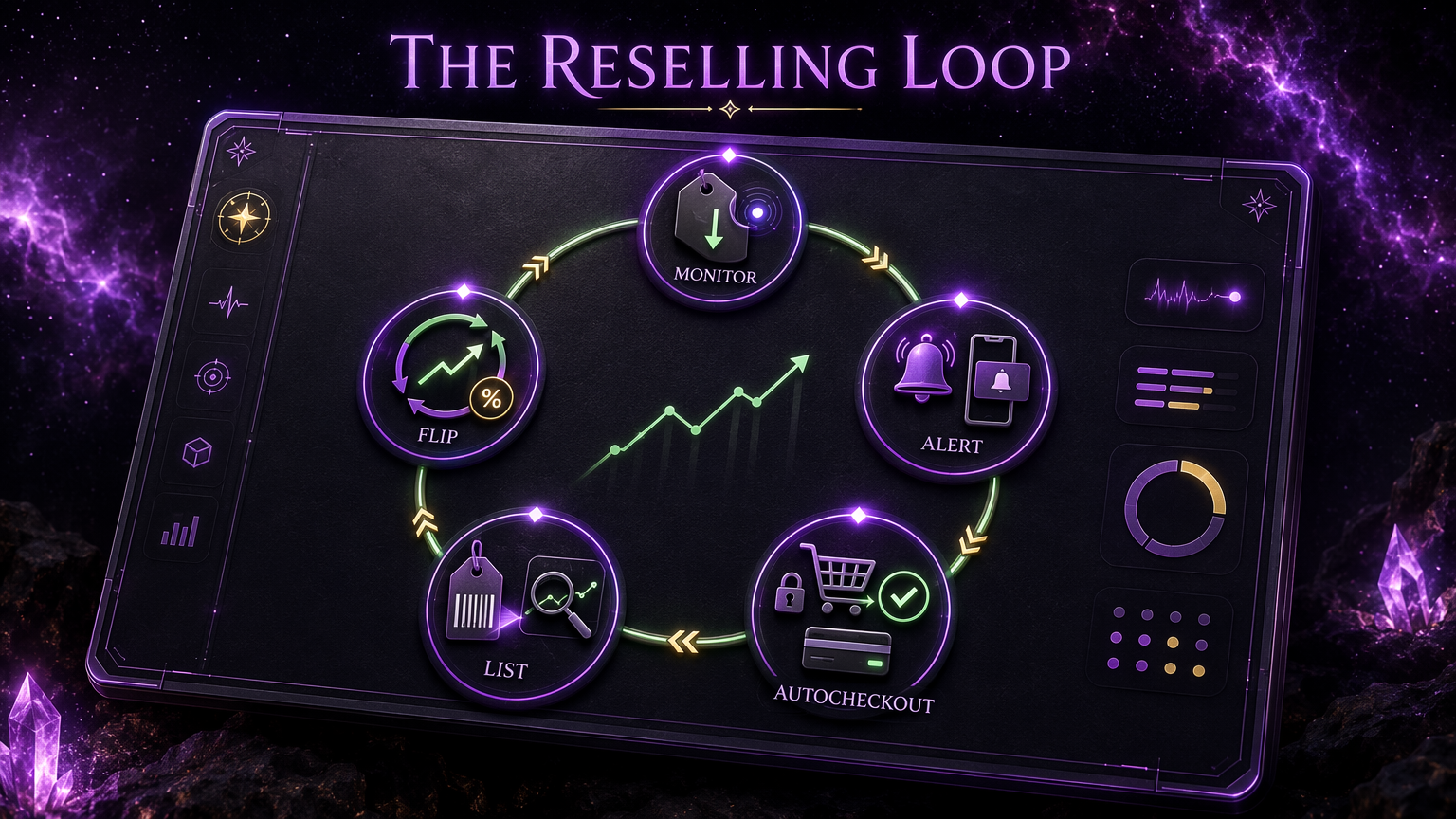
A lone buyer turning into a repeatable review loop
8. The story is simple: stop guessing alone
The emotional story is not luxury, escape, or overnight transformation. The story is smaller and stronger. You are standing in a store aisle or staring at a product page, trying to decide whether the deal is real. Alone, you guess. With a better system, you check.
That is the room the copy should put the reader in. Phone in hand. Cart open. Sold listings pulled up. Shipping weight checked. Community comments scanning for a warning. A small buy placed only after the math survives. The feeling is not hype. It is control.
That is the offer at its best: fewer blind guesses, faster learning, cleaner decisions, and a community that can help you see what a lone buyer misses.
Product card connected to eBay, Amazon, Facebook, and local pickup paths
9. Every good buy needs an exit before it needs excitement
A beginner asks, "How cheap is it?" A better buyer asks, "Where does it go after I own it?" That question changes everything. It turns a shelf find into a resale plan. It forces you to choose the marketplace before checkout instead of discovering the problem at home with a receipt in your pocket.
Some products belong on eBay because the buyer base is broad and search-driven. Some belong on Facebook Marketplace because they are too bulky to ship. Some are better for Amazon only if the listing is open, the fees make sense, and the condition rules are clear. Some should stay on the shelf because the exit is foggy.
This is a strong infographic moment because it shows the deal moving through routes. Product to platform. Platform to fee. Fee to net. Net to cash. The reader sees the whole chain, not just the first link.
Receipts, cancelled orders, shipped orders, and net-profit logs
10. The best proof is boring enough to trust
The internet loves spectacular proof. Huge hauls. Big screenshots. Wild discounts. Those can be useful, but the proof that actually improves a buyer is quieter: a receipt, a shipped order, a sold listing, a fee breakdown, a cancelled order, and a note about what changed next time.
A landing page gets stronger when it separates these proof types. A screenshot can show possibility. A ledger can show method. A cancellation can show honesty. A fee table can show restraint. Put them together and the offer feels less like theatre and more like an operating room with the lights on.
This is also where the copy should avoid overclaiming. Do not turn examples into promises. Do not turn member wins into typical results. Use proof to show the workflow exists, not to imply the outcome is automatic.
Fit filter separating process buyers from guarantee seekers
11. The comparison should make the wrong buyer leave
Good copy sells and filters at the same time. That matters here. The wrong buyer is expensive. They join expecting guaranteed profit, ignore the checks, buy too much, skip the listing work, and blame the room when the math never made sense. The right buyer understands that alerts are only useful when paired with execution.
So the lander should be comfortable saying who should skip. Skip if you cannot act during deal windows. Skip if you have no capital for inventory. Skip if you hate tracking numbers. Skip if Discord overwhelms you. Skip if you need a promise no honest community can make.
This does not weaken the CTA. It strengthens it. The serious buyer feels the page is telling the truth. The unserious buyer self-selects out before becoming a churn problem.
Friday review board: wins, misses, stuck cash, next rules
12. The weekly review is where the side hustle becomes a system
Most people review only when something goes badly. That is too late. A weekly review turns scattered buys into a learning loop. What alerts were worth checking? Which stores wasted time? Which categories moved? Which products sat? Which fees surprised you? Which decision would you repeat?
This is where a community can become more than a feed. Members can compare not just wins, but rules. One person learns to avoid oversized home goods. Another learns that small electronics accessories move faster. Another learns that seasonal goods need a tighter clock. Those lessons are the compounding asset.
The landing page should make this visible because it reframes the membership. You are not joining only for today's alert. You are joining to shorten the feedback loop between action and judgment.
Join button connected to a 30-day evidence log
13. The CTA should feel like the first step of a test
A strong CTA does not need fake urgency. It needs a clean next step. Open the current Whop page. Verify the live terms. Join if the workflow fits. Spend the first month logging alerts, making small test decisions, and reviewing the evidence.
That is a better promise than "start earning today" because it is under the buyer's control. They can take the step. They can run the test. They can decide from data instead of mood. It lowers pressure and raises trust at the same time.
This is the final Hormozi lever in practical form: raise the dream with a better sourcing workflow, raise belief with concrete checks, cut time delay with a first-month test, and lower effort with templates, tables, and community memory.
Terms checklist with price, access, cancellation, and refund fields
14. The refund question belongs before the checkout
A serious buyer checks terms before the emotional high of joining. Price, access, cancellation, refund policy, included products, and renewal timing should be verified on the live Whop page. Static copy can explain the decision framework, but live terms are the source of truth.
This protects the buyer from stale assumptions. It also protects the lander from pretending to know what may change. A price, review count, member count, or refund line can shift. The page should train the reader to verify before paying.
That habit fits the entire offer. Verify the membership the same way you verify a deal: check the live source, understand the downside, and make the decision with open eyes.
Write the answer down before checkout: what am I buying, what will I do in week one, how will I measure whether this helped, and what would make me cancel? That one note turns a purchase into a controlled test.
If the answer is vague, wait. A good offer still looks good after ten minutes of sober checking.
A complete operating system: source, verify, buy, list, review, improve
15. The final promise is a better operating system
The strongest final promise is not a number. It is an operating system. A place to see more opportunities. A way to test them faster. A language for comparing them. A routine for logging what happened. A community that can make lonely decisions less blind.
That promise is specific enough to believe and valuable enough to act on. It does not need fake certainty. It does not need luxury imagery. It does not need to turn every member story into a universal outcome. It simply says: if you want to stop guessing alone, here is the workflow.
The page ends where the buyer's work begins. Open the offer. Verify the live terms. Join if the system fits. Then spend the first month proving whether the workflow improves your decisions.
Choose the path that matches where you are.
New to reselling
Read the beginner guide, then run the net-profit table on three sample products before buying anything.
Already catching alerts
Use the first-month test: shipped, cancelled, listed, sold, net cash, and what rule changed.
Considering Premium
Upgrade only if priority access or mentoring removes a bottleneck you can already measure.
Looking at AI tools
Compare a week of manual decisions against tool-assisted decisions before trusting more volume.
Pick the path that matches your behavior.
Do not upgrade for a feeling. Upgrade when the next tier removes a real constraint in your current workflow.
Black Box
Core community access for deal alerts, reselling training, and workflow support.
Black Box Premiums
A higher-intensity path for members who already act on alerts and want more feedback.
Flipseek
AI/tool angle for faster sourcing and decision support, best tested against your old process.
Use wins as examples, not guarantees.
The videos work best when framed as deal examples to study: what was found, how it was checked, and what a cautious buyer would verify before copying the move.
🎥 Latest Money-Saving Deals
Frugal Season: Top Penny Deals Compilation
Watch the most popular Frugal Season penny deal finds! Home Depot, Target, and Walmart clearance secrets revealed.
How to Find PENNY DEALS at Home Depot
Learn the exact method to uncover hidden penny clearance deals at Home Depot. This technique has generated thousands in profits.
INSANE Penny Clearance at Home Depot
Incredible penny clearance haul captured on camera! See what our team found and how much profit we made.
Target Hidden Clearance Secrets Revealed
Target has hidden clearance sections most shoppers never find. Watch how we uncover these amazing deals.
Home Depot Clearance Deals You're Missing
These Home Depot clearance deals are incredible! Learn how to find tools, home improvement items, and more at penny prices.
Walmart's Hidden Clearance Goldmine
Walmart hides amazing clearance deals in plain sight. Watch how we find them and what we score!
Frugal Season: Penny Deal Strategies
Master the art of finding penny deals with these proven strategies from the Frugal Season team.
Amazing Clearance Finds at Target
Target clearance is crazy right now! Watch these amazing finds and learn how to replicate our success.
Home Depot Made a Big Pricing Mistake
Home Depot accidentally priced items at penny levels. Watch how we capitalised on this incredible error!
Hidden Clearance Employee Got Mad
Our team found incredible hidden clearance deals, but an employee was not happy! Watch how we handle these situations.
Frugal Season: Best Penny Deals of the Month
The best penny deals from this month compiled! Home Depot, Lowe's, and more clearance goldmines.
Retail Arbitrage: Finding Hidden Clearance
Retail arbitrage at its finest! Learn how to find hidden clearance sections at major retailers.
Frugal Season: Incredible Clearance Haul
An incredible clearance haul from our latest shopping run. See what we found and how much we saved!
How to Find Penny Deals at Any Store
The complete guide to finding penny deals at any store. These strategies work at Home Depot, Target, Walmart, and more!
Frugal Season: Top 10 Finds This Week
Our top 10 clearance finds this week! Amazing deals on tools, home goods, electronics, and more.
Not a wall of text. A library of buyer decisions.
Each guide has a unique hero visual, section images, checklists, comparison blocks, and CTA moments between the teaching.
Frugal Season Review: The Sober Buyer Guide Before You Join
Frugal Season Review: The Sober Buyer Guide Before You Join
A practical review of the deal-alert community, the buyer fit, the risks, and the workflow that has to exist before the membership makes sense.
Price Errors: How to Chase Them Without Losing Your Head
Price Errors: How to Chase Them Without Losing Your Head
Price errors can move fast. This guide shows the verification habits that matter before a mistake becomes your mistake.
Retail Arbitrage for Beginners: A Field Manual, Not a Fantasy
Retail Arbitrage for Beginners: A Field Manual, Not a Fantasy
A beginner-friendly map for store walks, barcode checks, margin math, category selection, and when to leave the shelf alone.
Online Arbitrage vs Retail Arbitrage: Which Fits Your Actual Week?
Online Arbitrage vs Retail Arbitrage: Which Fits Your Actual Week?
A grounded comparison of time, capital, speed, risk, travel, tools, and the kind of person each model rewards.
Black Box Premiums: When the Upgrade Is Worth Considering
Black Box Premiums: When the Upgrade Is Worth Considering
How to evaluate priority alerts, mentoring, workshops, and premium access without assuming the upgrade pays for itself.

Inside a Useful Deal Alert Discord: What Makes Alerts Actionable
Inside a Useful Deal Alert Discord: What Makes Alerts Actionable
The difference between noisy screenshots and alerts that help members verify, act, and learn from misses.
The Deal Hunter Toolkit: Apps, Spreadsheets, Rules, and Receipts
The Deal Hunter Toolkit: Apps, Spreadsheets, Rules, and Receipts
A practical toolkit for tracking buys, checking prices, documenting proof, and keeping your resale work honest.
Clearance Flipping Math: The Net Profit Formula Before You Buy
Clearance Flipping Math: The Net Profit Formula Before You Buy
A calculator-first guide to fees, shipping, storage, cancellations, returns, and time-to-cash.

Penny Deals and Hidden Clearance: A Cautious Field Guide
Penny Deals and Hidden Clearance: A Cautious Field Guide
How to think about penny deals, store variance, employee friction, local rules, and why proof matters before you drive across town.
A 30-Day Reselling Side Hustle Plan for People With Real Jobs
A 30-Day Reselling Side Hustle Plan for People With Real Jobs
A schedule for sourcing, verification, listing, bookkeeping, and weekly review when you do not have all day.
Flipseek and AI Deal Tools: Useful Edge or Expensive Distraction?
Flipseek and AI Deal Tools: Useful Edge or Expensive Distraction?
A buyer guide for AI sourcing tools, alert automation, proof boundaries, and how to test whether tools improve decisions.
Deal Community Red Flags: What to Check Before Paying
Deal Community Red Flags: What to Check Before Paying
A plain checklist for proof claims, refund terms, income language, stale screenshots, fake urgency, and unsupported guarantees.
Your First Month in Frugal Season: What to Do Before You Buy Big
Your First Month in Frugal Season: What to Do Before You Buy Big
A first-month plan for learning the channels, logging alerts, making small test buys, and measuring whether the community fits.
Amazon, eBay, Facebook Marketplace, and Poshmark: Where Should You Sell?
Amazon, eBay, Facebook Marketplace, and Poshmark: Where Should You Sell?
A comparison of fees, speed, shipping, trust, categories, and local versus national resale paths.
Frugal Season vs Free Reselling Content: What Are You Actually Paying For?
Frugal Season vs Free Reselling Content: What Are You Actually Paying For?
A buyer-focused comparison between free videos, social deal posts, paid alerts, mentoring, and community memory.
Join for the system. Skip if you need certainty.
The cleanest promise is not "you will profit." The cleanest promise is "you will get a better workflow for finding, checking, and learning from deals." That is believable. That is useful. That is the kind of copy that survives scrutiny.